Location
3/4, Sarswati Plaza Opp. N.A.S. College, E.K. Road, Meerut

Dr. Vineet Bansal's Clinic, located at 3/4, Saraswati Plaza, Opposite N.A.S. College, E.K. Road, Meerut, is renowned for its excellence in cardiology. With exceptional expertise, Dr. Vineet Bansal is committed to delivering high-quality, personalized healthcare services.
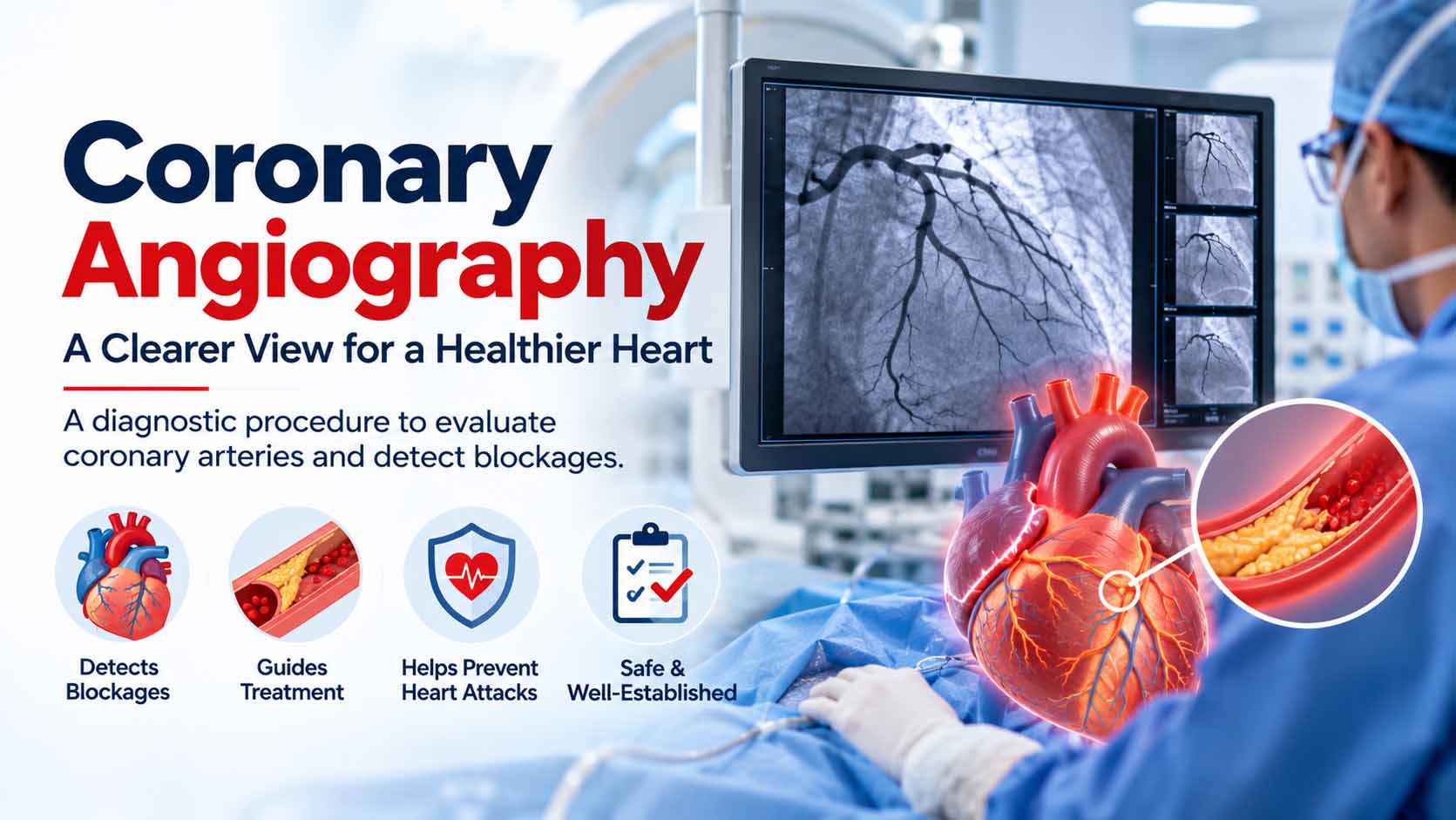
Coronary artery disease is a common cardiovascular condition that develops when the arteries supplying blood to the heart become narrowed or blocked. Identifying these blockages is important for understanding the severity of the disease and determining appropriate medical management.
Coronary angiography, also known as a coronary angiogram or heart angiography test, is a diagnostic procedure used to examine the coronary arteries and identify narrowing or blockages that may restrict blood flow to the heart muscle.
Dr. Vineet Bansal, MBBS, MD, DM (Cardiology), is a cardiologist based in Meerut, Uttar Pradesh. Understanding the purpose, benefits, and limitations of coronary angiography can help patients make informed decisions about their cardiovascular health.
Coronary angiography is a specialized diagnostic procedure that uses X-ray imaging and contrast dye to visualize the coronary arteries.
During the procedure, a thin, flexible tube called a catheter is introduced into a blood vessel, usually through the wrist or groin. The catheter is guided toward the coronary arteries, and contrast dye is injected to make the arteries visible on X-ray images.
These images help doctors identify narrowed or blocked areas within the coronary arteries.
Coronary angiography provides important information about the location and severity of coronary artery disease.
A cardiologist may recommend coronary angiography when clinical findings suggest significant coronary artery disease or when detailed information about the coronary arteries is necessary.
Common reasons include:
Not every patient experiencing chest pain requires invasive coronary angiography. The decision depends on symptoms, medical history, examination findings, cardiovascular risk, and previous investigations.
Coronary artery disease may produce symptoms such as:
Chest Discomfort: Pressure, tightness, heaviness, or pain in the chest, particularly during physical exertion.
Shortness of Breath: Difficulty breathing during activity or, in some cases, at rest.
Unusual Fatigue: Reduced ability to perform normal activities, particularly when associated with other cardiovascular symptoms.
Discomfort in Other Areas: Pain or discomfort extending to the arms, shoulders, neck, jaw, or back.
Sweating or Nausea: These symptoms may occur during an acute cardiac event, especially when accompanied by chest discomfort.
Symptoms alone cannot confirm coronary artery disease. Appropriate medical evaluation is necessary.
Emergency Awareness: New or severe chest pain, especially with breathlessness, sweating, fainting, or pain spreading to the arm or jaw, requires immediate emergency medical attention.
Coronary angiography is generally performed in a cardiac catheterization laboratory, commonly called a cath lab.
Before the procedure, the healthcare team reviews the patient's medical history, current medications, allergies, kidney function, and relevant cardiac investigations.
The patient is informed about the procedure, potential benefits, and possible risks.
The area where the catheter will be inserted, usually the wrist or groin, is cleaned and numbed with local anesthesia.
Some patients may receive medication to help them relax.
A small catheter is introduced into the blood vessel and carefully guided toward the coronary arteries under X-ray guidance.
Contrast dye is injected through the catheter to outline the coronary arteries.
A series of X-ray images is recorded to examine blood flow and identify narrowing or blockages.
After the necessary images are obtained, the catheter is removed and pressure or a specialized device is used to control bleeding.
The patient is monitored during recovery.
The duration of the procedure varies according to the patient's condition and the complexity of the investigation.
Coronary angiography can provide detailed information about:
In selected situations, additional catheter-based assessments may be required to understand the functional significance of a narrowing.
Coronary angiography is a commonly performed cardiac procedure. However, because it is invasive, it carries potential risks.
Possible complications include:
The likelihood of complications varies depending on the patient's medical condition and procedural factors.
A healthcare professional should explain the expected benefits and risks before the procedure.
Preparation depends on the clinical situation and whether the procedure is planned or performed urgently.
General preparation may include:
Patients should not stop blood thinners, diabetes medications, or other prescribed medicines without specific medical instructions.
Recovery depends on the patient's overall health, the access site used, and whether additional treatment was performed.
After the procedure, patients are monitored for bleeding, blood pressure changes, and other possible complications.
Some individuals undergoing uncomplicated diagnostic angiography may return home the same day, while others require a longer hospital stay.
Patients are generally advised to follow instructions regarding:
Persistent bleeding, increasing swelling, severe pain, or new chest discomfort after the procedure requires prompt medical assessment.
Coronary angiography and coronary angioplasty are related but different procedures.
Coronary Angiography: A diagnostic procedure used to visualize the coronary arteries and identify narrowing or blockages.
Coronary Angioplasty: A treatment procedure in which a balloon, often followed by stent placement, may be used to open a significantly narrowed or blocked coronary artery.
Not every blockage identified during angiography requires angioplasty.
Depending on the patient's condition and coronary anatomy, treatment options may include medications, lifestyle management, angioplasty, or coronary artery bypass surgery.
Both investigations assess coronary arteries, but they use different techniques.
Invasive Coronary Angiography: Uses a catheter and contrast dye to obtain X-ray images of the coronary arteries. It may also allow certain catheter-based assessments or interventions when clinically appropriate.
CT Coronary Angiography: Uses a CT scanner and intravenous contrast dye to obtain images of the coronary arteries without inserting a catheter into an artery.
The choice between these investigations depends on symptoms, clinical risk, previous test results, and the information required.
Awareness of coronary artery disease and available diagnostic investigations is important for individuals living in Meerut and surrounding areas.
Understanding the role of coronary angiography can help patients recognize why the procedure may be recommended and what information it provides.
Dr. Vineet Bansal, MBBS, MD, DM (Cardiology), is a cardiologist in Meerut, Uttar Pradesh.
Patients undergoing cardiovascular evaluation may benefit from discussing the purpose, risks, limitations, and potential outcomes of coronary angiography with their treating healthcare professional.
The insertion area is usually numbed with local anesthesia. Patients may experience temporary pressure or discomfort, but significant pain is not typical during an uncomplicated procedure.
A diagnostic coronary angiogram often takes approximately 30–60 minutes, although the time varies depending on the patient's condition and procedural complexity. Preparation and recovery require additional time.
Yes. Coronary angiography can identify narrowing and blockages in the coronary arteries and help assess their location and severity.
No. Angiography is primarily diagnostic, while angioplasty is a treatment used to open selected narrowed or blocked arteries.
Yes. A catheter may be inserted through the radial artery in the wrist or through an artery in the groin, depending on clinical and procedural considerations.
No. Treatment depends on symptoms, the severity and location of coronary disease, the patient's overall condition, and clinical assessment.
No. A cardiologist determines whether angiography or another investigation is appropriate based on the patient's symptoms, risk factors, and clinical findings.
Recovery time varies depending on the access site, whether additional procedures were performed, and the patient's health. Patients should follow their healthcare team's discharge instructions.
Coronary angiography is an important diagnostic procedure for evaluating coronary artery disease.
By providing detailed images of the coronary arteries, it helps healthcare professionals identify narrowing or blockages and make informed treatment decisions.
Understanding the procedure, its benefits, potential risks, and recovery requirements can help patients participate more confidently in discussions about their cardiovascular care.
Medical Disclaimer: This content is intended solely for public awareness and educational purposes. It does not constitute personalized medical advice or promote medical services. Diagnostic procedures and treatment decisions should be based on individual medical evaluation by a qualified healthcare professional.